AMC 8 · 2024 · #19

Grade 4 rate-ratio
ratio-proportionfraction-arithmeticcomplementary-counting complementary-countingcasework ↑ Prerequisites: fraction-arithmeticratio-proportion
📏 Medium solution 💡 3 insights 📊 Diagram
📘 View easy version →

Problem

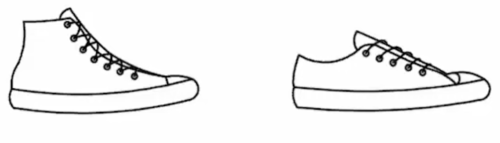
Jordan owns 15 pairs of sneakers. Three fifths of the pairs are red and the rest are white. Two thirds of the pairs are high-top and the rest are low-top. The red high-top sneakers make up a fraction of the collection. What is the least possible value of this fraction?

figure

(A) 0(B) 15(C) 415(D) 13(E) 25\textbf{(A) } 0\qquad\textbf{(B) } \dfrac{1}{5} \qquad\textbf{(C) } \dfrac{4}{15} \qquad\textbf{(D) } \dfrac{1}{3} \qquad\textbf{(E) } \dfrac{2}{5}

Pick an answer.

(A)
0
(B)
$dfrac{1}{5}$
(C)
$dfrac{4}{15}$
(D)
$dfrac{1}{3}$
(E)
$dfrac{2}{5}$
View mode:

Toolkit + CCSS Solution

Understand

Restated: Jordan owns 15 pairs of sneakers. $\tfrac{3}{5}$ of them are red (the rest white) and $\tfrac{2}{3}$ are high-top (the rest low-top). What is the **smallest possible fraction** of the 15 pairs that can be both red AND high-top?

Givens: Total pairs of sneakers: $15$; Red pairs: $\tfrac{3}{5}$ of the total, the rest are white; High-top pairs: $\tfrac{2}{3}$ of the total, the rest are low-top; Answer choices: $(A)\ 0,\ (B)\ \tfrac{1}{5},\ (C)\ \tfrac{4}{15},\ (D)\ \tfrac{1}{3},\ (E)\ \tfrac{2}{5}$

Unknowns: The **smallest** possible count of pairs that are both red AND high-top, divided by 15

Understand

Restated: Jordan owns 15 pairs of sneakers. $\tfrac{3}{5}$ of them are red (the rest white) and $\tfrac{2}{3}$ are high-top (the rest low-top). What is the **smallest possible fraction** of the 15 pairs that can be both red AND high-top?

Givens: Total pairs of sneakers: $15$; Red pairs: $\tfrac{3}{5}$ of the total, the rest are white; High-top pairs: $\tfrac{2}{3}$ of the total, the rest are low-top; Answer choices: $(A)\ 0,\ (B)\ \tfrac{1}{5},\ (C)\ \tfrac{4}{15},\ (D)\ \tfrac{1}{3},\ (E)\ \tfrac{2}{5}$

Plan

Primary tool: #1 Draw a Diagram

Secondary: #16 Change Focus / Count the Complement, #6 Guess and Check

Two classifications (color and style) overlap, so the first move is Tool #1 — draw a **2 by 2 table** that shows the four cells (red high-top, red low-top, white high-top, white low-top) all at once. The goal "make the red high-top cell as **small** as possible" is hard to attack directly, but flipping the perspective with Tool #16 turns it into the much easier goal "make the red **low-top** cell as **large** as possible." Finally Tool #6 (Guess and Check) lets us try $x = 0, 1, 2, 3, 4$ in turn and pick the smallest $x$ that keeps every cell $\ge 0$. We do **not** need Tool #13 (algebra) — table + complement + check is enough.

Execute — Answer: C

#1 Draw a Diagram 4.NF.B.4 Step 1
  • First find how many pairs are red, white, high-top, and low-top.
  • "$\tfrac{3}{5}$ of the 15 pairs are red" means split the 15 pairs into 5 equal groups and take 3 of them: $\tfrac{3}{5} \times 15 = 9$ red pairs.
  • Likewise "$\tfrac{2}{3}$ are high-top" means split into 3 equal groups and take 2: $\tfrac{2}{3} \times 15 = 10$ high-top pairs.
  • The remainders come from subtraction: white $= 15 - 9 = 6$ and low-top $= 15 - 10 = 5$.
$$\tfrac{3}{5} \times 15 = 9,\ \ 15 - 9 = 6,\ \ \tfrac{2}{3} \times 15 = 10,\ \ 15 - 10 = 5$$

💡 Taking $\tfrac{3}{5}$ or $\tfrac{2}{3}$ of a whole number to find "how many" is exactly Grade 4 multiplication of a fraction by a whole number.

#1 Draw a Diagram 1.MD.C.4 Step 2
  • Put the four totals (red 9, white 6, high-top 10, low-top 5) on the edges of a 2 by 2 table.
  • Let $x$ = pairs that are red AND high-top.
  • Then the other three cells are forced by the row and column totals: red low-top $= 9 - x$, white high-top $= 10 - x$, and white low-top $= x - 4$ (so that the white row sums to 6 and the low-top column sums to 5).
  • The single picture makes the constraint "every cell must be a non-negative integer" easy to see.
$$\begin{array}{c|cc|c} & \text{High-top} & \text{Low-top} & \text{Total} \\\hline \text{Red} & x & 9-x & 9 \\ \text{White} & 10-x & x-4 & 6 \\\hline \text{Total} & 10 & 5 & 15 \end{array}$$

💡 Sorting items by two categories (color and style) into the cells of a table is the Grade 1 "organize, represent, and interpret data with up to three categories" idea.

#16 Change Focus / Count the Complement 2.NBT.B.5 Step 3
  • Direct attack on "make $x$ as small as possible" is awkward, so **flip the focus** to its complement in the red row: "make red low-top $9 - x$ as **large** as possible." Red low-top has two ceilings: it cannot exceed the 5 low-tops that exist, and it cannot exceed the 9 reds that exist.
  • The tighter ceiling is the smaller one, $\min(5, 9) = 5$.
  • So red low-top $\le 5$, which means $9 - x \le 5$, i.e.
  • $x \ge 9 - 5 = 4$.
$$\text{red low-top} = 9 - x \le \min(5,\ 9) = 5\ \Longrightarrow\ x \ge 9 - 5 = 4$$

💡 Swapping a hard "minimize" question for an easier "maximize the leftover" question, then doing $9 - 5 = 4$, is just subtraction within 100 — a Grade 2 skill.

#6 Guess and Check 2.NBT.B.5 Step 4
  • Now **guess and check** the candidate values $x = 0, 1, 2, 3, 4$ in the table.
  • For $x = 0$: red low-top would be $9$, but only $5$ low-tops exist — fail.
  • For $x = 1, 2, 3$: red low-top would be $8, 7, 6$ respectively — each still exceeds $5$, so all fail.
  • For $x = 4$: red low-top $= 5$, white high-top $= 6$, white low-top $= 0$, and every cell is a non-negative integer.
  • So $x = 4$ is the smallest feasible value.
$$x = 4:\ \begin{array}{c|cc|c} & \text{High-top} & \text{Low-top} & \text{Total}\\\hline \text{Red} & 4 & 5 & 9\\ \text{White} & 6 & 0 & 6\\\hline \text{Total} & 10 & 5 & 15 \end{array}$$

💡 Plugging in candidate values and checking whether subtractions stay non-negative is Grade 2 subtraction-within-100 work.

#1 Draw a Diagram 3.NF.A.1 Step 5
  • Divide the minimum count of red high-tops, $4$, by the total $15$ to get the fraction: $\tfrac{4}{15}$.
  • The denominator $15 = 3 \times 5$ shares no common factor with $4$, so $\tfrac{4}{15}$ is already in lowest terms.
  • Matching to the choices, $\tfrac{4}{15}$ is exactly (C).
  • (A) $0$ would mean $x = 0$ (impossible), (B) $\tfrac{1}{5} = \tfrac{3}{15}$ would mean $x = 3$ (impossible), and (D) $\tfrac{1}{3}$, (E) $\tfrac{2}{5}$ are both bigger than the minimum, so they cannot be the least value.
$$\dfrac{4}{15}\ \Rightarrow\ \textbf{(C)}$$

💡 Writing "$4$ out of $15$ equal pairs" as the fraction $\tfrac{4}{15}$ is the Grade 3 idea of a fraction as a part of a whole split into equal parts.

[1] #1 4.NF.B.4 First find how many pairs are red, white, high-top, and low-top. "$\tfrac{3}{5}$
[2] #1 1.MD.C.4 Put the four totals (red 9, white 6, high-top 10, low-top 5) on the edges of a 2
[3] #16 2.NBT.B.5 Direct attack on "make $x$ as small as possible" is awkward, so **flip the focus
[4] #6 2.NBT.B.5 Now **guess and check** the candidate values $x = 0, 1, 2, 3, 4$ in the table. F
[5] #1 3.NF.A.1 Divide the minimum count of red high-tops, $4$, by the total $15$ to get the fra

Review

Reasonableness: Re-add the $x = 4$ table by rows and columns: rows give $4 + 5 = 9$ (red) and $6 + 0 = 6$ (white); columns give $4 + 6 = 10$ (high-top) and $5 + 0 = 5$ (low-top). All four edge totals match exactly, so the configuration is valid. The fact that the minimum is not $0$ also matches a pigeonhole intuition: $9$ red pairs cannot all hide among the $5$ low-tops, so at least $9 - 5 = 4$ red pairs must be high-top. Finally, $\tfrac{4}{15} \approx 0.267$ sits comfortably between $\tfrac{1}{5} = 0.2$ and $\tfrac{1}{3} \approx 0.333$ — a reasonable size for "smallest possible."

Alternative: Tool #12 (Venn diagram) works too: draw circles "Red" and "High-top" inside a universe of $15$. With intersection $x$, the "red only" region is $9 - x$, the "high-top only" region is $10 - x$, and the "outside both" region (white low-top) is $15 - (9 + 10 - x) = x - 4 \ge 0$, which immediately gives $x \ge 4$. Same answer $\tfrac{4}{15}$, but with the inclusion-exclusion picture instead of the 2 by 2 table.

CCSS standards used (min grade 4)

  • 1.MD.C.4 Organize, represent, and interpret data with up to three categories (Sorting sneakers by the two categories (color and style) into the four cells of a 2 by 2 table.)
  • 2.NBT.B.5 Fluently add and subtract within 100 (Filling the table with $15 - 9 = 6,\ 15 - 10 = 5,\ 9 - 5 = 4$ and checking each candidate $x$ for non-negative cells.)
  • 3.NF.A.1 Understand a fraction as quantity formed by parts of a whole (Writing "$4$ out of $15$ equal pairs" as the fraction $\tfrac{4}{15}$ and matching it to a multiple-choice option.)
  • 4.NF.B.4 Apply and extend understanding of multiplication to multiply a fraction by a whole number (Computing $\tfrac{3}{5} \times 15 = 9$ red pairs and $\tfrac{2}{3} \times 15 = 10$ high-top pairs.)

⭐ This AMC 8 problem only needs Grade 4 "fraction of a whole number" and a simple table you already know!

⭐ This AMC 8 problem only needs Grade 4 "fraction of a whole number" and a simple table you already know!